"Find something you're passionate about and keep tremendously interested in it." - Julia Child
Showing posts with label Pizza. Show all posts
Wednesday, October 6, 2010
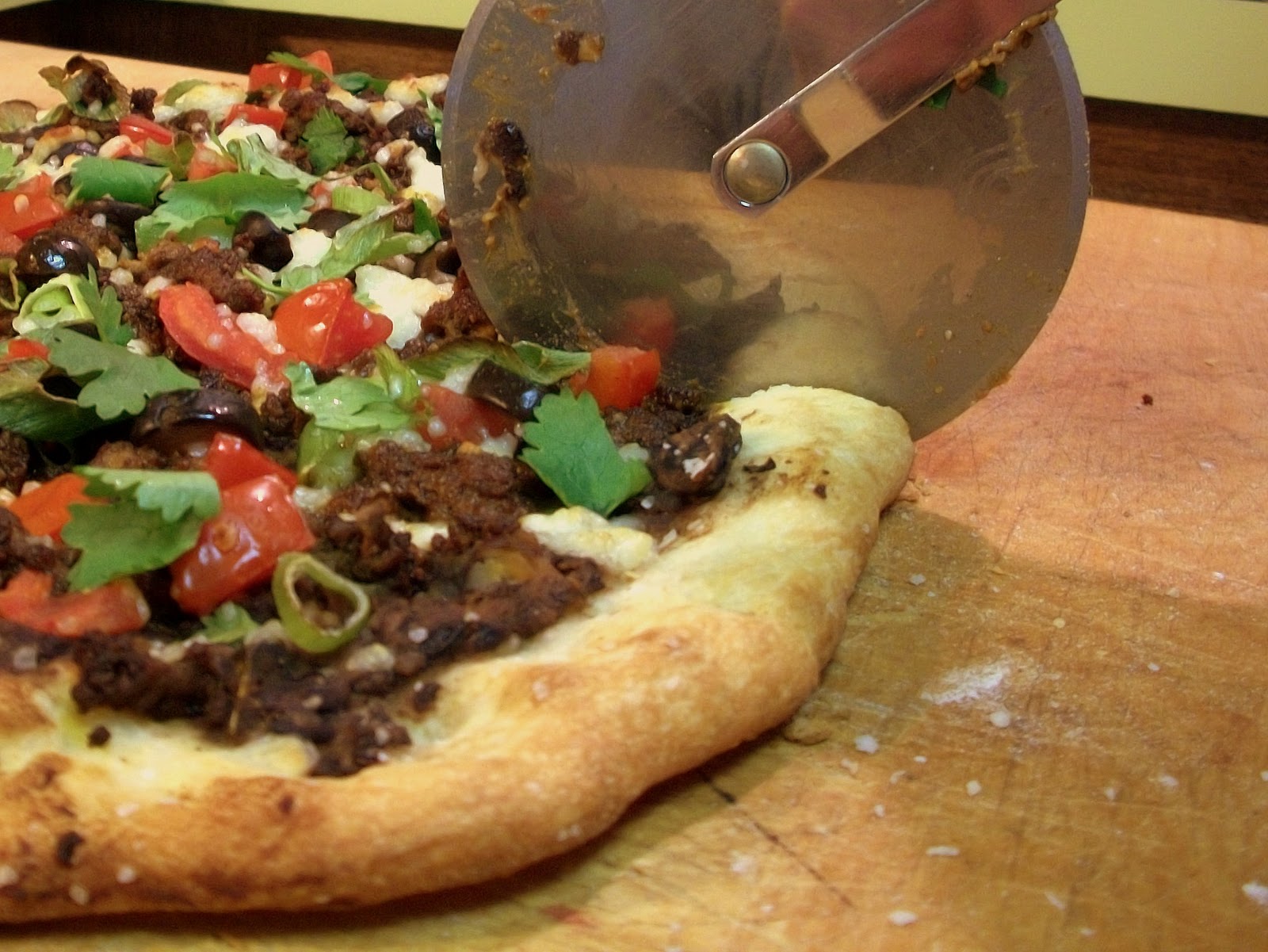
Mexican Pizza
We are very attached to our favorite refried bean recipe, but recently we tried out Rick Bayless's version. It's really easy and delicious too! They are different from the Test Kitchen version in that instead of pureeing the beans in a food processor before cooking, you just mash them in the pan at the end, coarse or smooth, depending on your preference. One less kitchen appliance to clean, so you gotta love that!
We used the beans on the Mexican pizza we made for dinner one night. This is a pretty hearty pizza, so we had a couple small slices each and a big salad loaded with veggies.
We used our favorite America's Test Kitchen pizza dough, Rick Bayless's Fried Beans recipe (see below), ground beef cooked with Rick Bayless's Garlicky Ancho Chile Rub (we had extra after using it for the steaks), and scattered some queso fresco, chopped tomatoes, sliced green onions, and sliced olives over the top. After we took it out of the oven, we sprinkled on a little chopped cilantro. You could modify this in numerous ways depending on what you like or what you have on hand.
Fried Beans (Frijoles Refritos)
adapted from Rick Bayless - Mexican Everyday
makes 2 1/2 cups, serving 4-5
2-3 tablespoons rich-tasting fresh pork lard, vegetable oil, or bacon drippings (if you want creamier beans, use 3 tablespoons)
2-3 garlic cloves, peeled and finely chopped or crushed through a garlic press
3 1/2 cups home-cooked beans with just enough cooking liquid to cover OR two 15-ounce cans beans (we used black beans)
Salt
Heat the lard, oil, or bacon drippings in a large (10-inch) skillet over medium heat. Add the garlic, cook for about one minute, stirring constantly, until fragrant but not brown. Now add the beans. As they come to a simmer, coarsely mash them using the back of a wooden spoon or a potato masher (he also suggests a bean masher, but I don't know what that is). Leave them chunky or keep mashing until they are smooth - it's up to you. Cook for about 8 minutes, stirring almost constantly, until they have the consistency of very soft mashed potatoes. Taste and season with salt as needed.
Thursday, July 29, 2010
Pizza with Sweet Potatoes, Leeks, and Blue Cheese
Oh, and I'm so thankful that Joe likes to make pizza dough. It's so good! It does take a couple hours, but the majority of that time is spent letting the dough rise, so you can go play video games or do laundry or whatever during that time. I included the dough recipe we used below, even though I had pretty much nothing to do with making it.
Sweet Potato, Leek, and Blue Cheese Pizza
Pizza Dough recipe adapted from Mark Bittman - How to Cook Everything
Serves 2-4
For the dough:
3 cups all-purpose or bread flour, plus more as needed
2 teaspoons instant yeast
2 teaspoons coarse kosher or sea salt, plus extra for sprinkling
2 tablespoons extra virgin olive oil
For the toppings:
1 medium sweet potato
1 large leek
1/2 cup crumbled Gorgonzola or blue cheese
To make the dough:
Combine the flour, yeast, and salt in the food processor. Turn it on and add 1 cup water and the oil through the feed tube as it's running. Process for about 30 seconds, while adding more water, a little at a time, until the mixture forms a ball. It should be slightly sticky, so if it still feels dry, add another couple tablespoons of water and process for about 10 more seconds (on the other hand, if the mixture is TOO sticky, add a tablespoon or two of flour).
Sprinkle some flour over a clean counter top or other work surface and tip the dough out onto it. Knead by hand for a few seconds to form a smooth, round ball. Place the dough in a large bowl, cover with plastic wrap, and let it rise until it has doubled in size, about 1 to 2 hours (if you're in a hurry, you can cut this time short, or if you are making this ahead of time, you can let the dough rise in the fridge for up to 6-8 hours). If you are going to freeze the dough, wrap tightly in plastic wrap or a ziplock bag and freeze for up to a month (to defrost, either leave in plastic bag or place in covered bowl and let thaw in the fridge or at room temperature. Bring to room temperature before shaping.). Otherwise, proceed with the recipe.
When the dough is ready, shape it into a ball and divide it into two or more pieces (one piece for each pizza, depending on how large of pizzas you want to make). Shape each piece into a round ball. Place each ball on your lightly floured work surface, sprinkle with flour, cover with plastic wrap or towel, and let them rest for 20 minutes.
To make the pizza toppings:
Wash and scrub the sweet potato. Peel it, then chop it into one inch pieces. Drizzle some oil onto a baking sheet and add the potatoes. Toss them in the oil to coat. Roast at 350-400 F until tender and nicely browned, turning every 10 minutes or so. Season with salt and pepper to taste.
To wash the leek, cut off the dark green leaves and discard them, then thinly slice the white part into rings. Pull the rings apart with your fingers and place them in a bowl of cold water. Rub them with your fingers to remove any dirt (the dirt will sink to the bottom), then remove the leeks with your hands or a slotted spoon and pat dry. Heat a tablespoon of oil in a skillet over medium heat. When hot, add the leeks and sauté until tender and just starting to brown.
To make the pizza:
Put a baking stone on the lower rack if using and heat the oven to at least 500 F (yes, I said 'at least', so if your oven goes higher, feel free!). Roll or lightly press the dough into a flat roundish shape, lightly flouring the work surface and the dough as needed (use only as much flour as you need to). Let the round sit for a few minutes to relax the dough and make it easier to roll out. Get your pizza paddle, if you have one, and lay a piece of parchment paper over it. Place the round on the parchment paper and roll or press the dough out as thinly as you like, turning occasionally and sprinkling with flour as necessary. If using baking sheets, oil them first, then press each dough ball into a flat round directly on the sheets.
Sprinkle the top with some salt and drizzle with olive oil. Evenly distribute the sweet potato, leeks, and cheese over the top.
Slide the pizza (still on the parchment paper) onto the pizza stone, or slide the baking sheets into the oven. Bake 6-12 minutes, depending on how hot the oven is, until nicely browned. Serve immediately.
Tuesday, March 2, 2010
The straw that broke the pizza stone
We actually made this on Sunday, I'm a little behind on blogging.
Usually we order pizza as a treat or because we've lost all motivation to cook for ourselves. But pizza is a typically a huge splurge when you're trying to watch what you eat, so we don't do that very often anymore (I'm better than I used to be though, I used to pig out and eat about four slices, with pepperoni the primary topping). Now if we pick it up from Papa Murphy's, our usual place, we often order the Delite pizza with just cheese and pineapple, and add our own turkey pepperoni at home before we bake it. We also have a salad with it.)
However, we have since learned that it can be incredibly satisfying to make our own pizza from scratch, and a whole lot healthier too because we have complete control over all the toppings! I think everyone should try it at least once. Also...get a pizza stone! It makes all the difference. It creates a cooking atmosphere that is more like a stone oven. The pizza stone helps to keep the oven very hot, and keeps the temperature from fluctuating, which results in a crisp crust.
Upon removing our delicious pizza from the oven, we realized that our pizza stone of about 3 years finally kicked the bucket. It had cracked completely in half. Actually, we will probably keep using it until we get around to buying a new one, it just stores more compactly now than it used to. :-)
This time we chose a thin crust pizza recipe out of the America's Test Kitchen Family Baking Book. It's actually used for making "Pizza Margherita", but we wanted to just make the dough and top with other things, so we just ignored the other steps. We already had some whole wheat flour and whole wheat pastry flour that we had ground ourselves at the Co-op so we used those instead of the flours they called for. I'm no expert on whether these were equivalent substitutions or not, but we were happy with our crust so I would say they worked fine.
For the pizza sauce, we used the "Quick Pizza Sauce" recipe from the same book. It was basically can of crushed tomatoes that you dressed up with garlic, olive oil, salt and pepper.
We topped the pizza with Mozzarella and Parmesan cheeses, kalamata olives and roasted red peppers. After it baked, we sprinkled it with thinly sliced basil and sorrel (a new item in the CSA that I'd never heard of before, it's a leafy green but usually considered more of an herb, so I'm guessing that means you should use it sparingly). You add the herbs after the pizza has baked to preserve their flavor. I'm trying to add fewer toppings to pizza than I used to, because I read that if you add too many ingredients, the flavors will blur each other out. You'll get a more flavorful pizza if you stick to just a couple of ingredients.
This recipe makes two 12-inch pizzas, so we were all set for lunches for the next couple of days!
To make the dough:
In your food processor (fitted with a dough blade if possible), pulse together 1 3/4 cups of all purpose flour (or whole wheat flour), 1 cup cake flour (or pastry flour), 2 teaspoons sugar, 1 1/2 teaspoons table salt, and 1 1/4 teaspoons rapid rise yeast. Keep the processor running, and slowly pour 1 cup warm water (110 F) through the feed tube until a rough ball forms, which should take about 30-40 seconds.
Let the dough rest for about 2 minutes, the process for 30 more seconds. If at this time the dough is still sticky and clinging to the side of the bowl, add up to 1/4 cup all-purpose flour, 1 tablespoon at a time, as needed, pulsing to combine. Joe says he didn't need to add any more flour (I should probably add that I was actually at the store while he was making this dough).
Turn the dough out onto a lightly floured counter top and form it into a smooth, tight ball. Lightly oil a large bowl and place the dough inside. Cover with plastic wrap and put the bowl in a warm place. Take a good look at it now because you are going to let it rise until it doubled in size, so try to get an idea of what that will look like. It will take 1 to 1 1/2 hours. Go relax, play a board game, or get some chores done in the meantime.
When the dough looks about the right size, make sure your oven rack is in the lower-middle position and place the pizza stone on the rack. Preheat the oven to 500 F. Let the stone heat in the oven for 30 minutes (up to an hour at most). If you don't own a pizza stone yet, you can substitute a rimless baking sheet, or a regular baking sheet flipped upside down. Preheat in the same manner as the pizza stone.
To make the sauce:
Saute two minced garlic cloves in two tablespoons of extra-virgin olive oil in a medium saucepan over medium heat. When the garlic is sizzling and smells awesome (about 1 1/2 minutes), stir in one 28-ounce can of crushed tomatoes and simmer until the sauce has thickened, about 15 minutes. Taste and season with salt and pepper as needed.
By the way, I think it's funny that this recipe makes enough sauce for three large pizzas, but the dough recipe only makes two pizzas. So, after making your two pizzas tonight, you could either keep this cycle going and make more dough, and then make more sauce, OR you could just use the leftovers as a dipping sauce for soft garlic bread sticks on another night. The sauce keeps for up to four days refrigerated.
To assemble the pizza:
Line a rimless (or inverted) baking sheet with parchment paper. This is what you will prepare pizza on, and the parchment will help you transfer it into the oven. If you have a pizza paddle, you should use that instead of the baking sheet. We have one that came with our pizza stone.
In the bowl, divide the dough into two equal pieces. Leave one half in the bowl, covered with plastic wrap, and turn the other piece out onto a lightly floured counter top. Press and roll the dough into a 12-inch round (it doesn't have to be perfectly round). Carefully transfer the dough onto the piece of parchment paper you laid out earlier. Reshape as needed.
Lightly brush the outer 1/2 inch edge of the dough with oil. Spread about 1/2 to 3/4 cup of the tomato sauce over the pizza, leaving a 1/2 inch border around the edge. Top with whatever cheese and other toppings you want. Slide the parchment and pizza onto the hot pizza stone. Bake for 7-8 minutes, or until the cheese is melted/golden, and the crust edges have browned a bit (while the first pizza is baking, prepare the other one).
To remove the pizza from the oven, slide the parchment and pizza back onto the baking sheet or pizza paddle. Transfer the pizza to a cutting board, discarding the parchment. Sprinkle with herbs, if using. Let the stone reheat for about 5 minutes before starting the second pizza. Slice and serve hot.
Fun Memory: when my sister and I were kids, my dad would sometimes cut the pizza into weird, unconventional shapes for us, rather than the usual pie slices. We got the biggest kick out of that, I think because kids love seeing adults "break the rules" and be goofy.
Subscribe to:
Posts (Atom)
